Archive for November, 2010

A Singularity


29 Nov
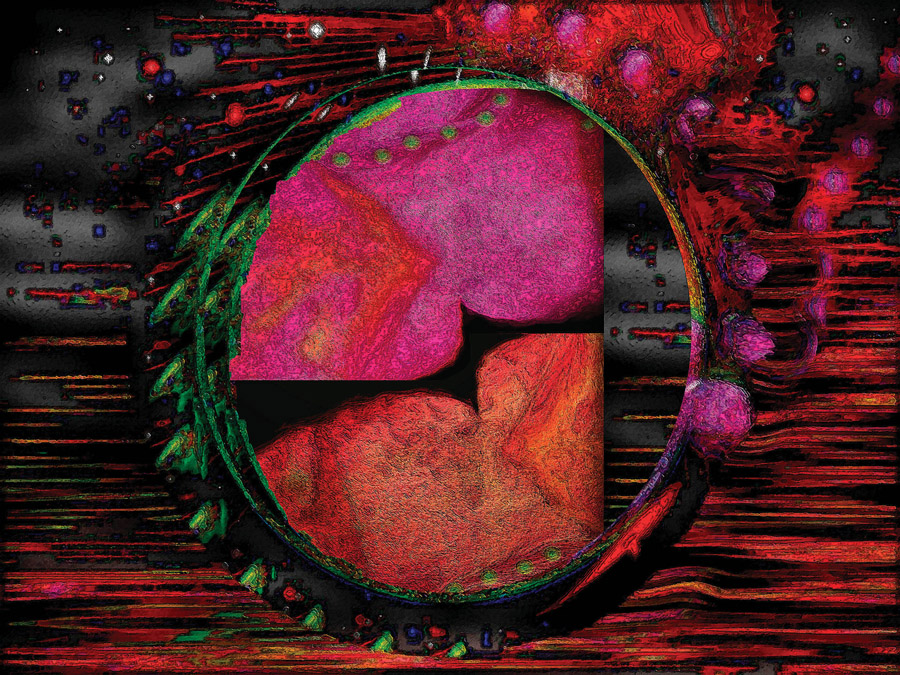
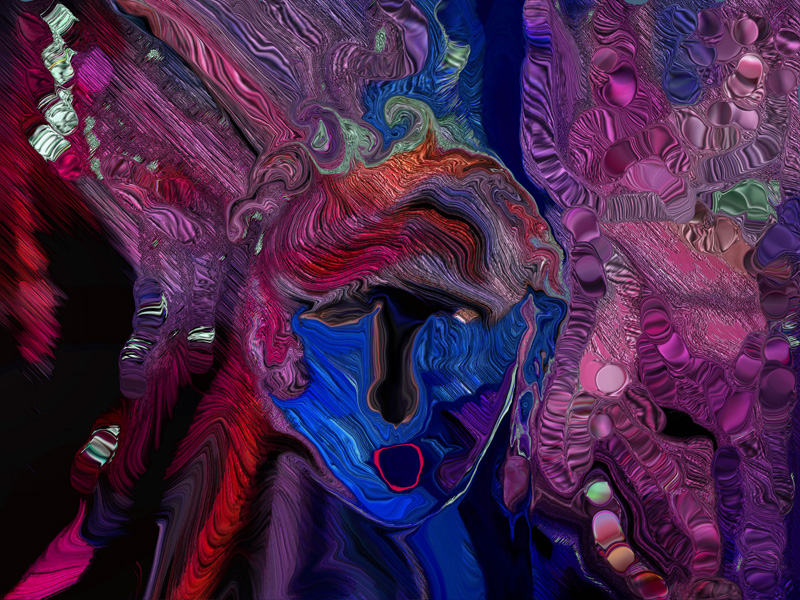
abstract image representing a singularity, such as a black hole, from Everything IS, a visual and philosophical theory of everything

A Singularity

page 54-55 from Everything IS, a visual and philosophical theory of everything

The Big Bang Theory of the Creation of the Universe theorizes that all of the mass of the universe was once concentrated in one infinitely heavy pinprick that reached some critical point and exploded into our universe. The Big Bang is called a singularity, which is a state/event beyond which it is theoretically impossible to peer due to our current understanding of the behavior of light and the flow of time. It is theorized that black holes might be singularities that are creating new universes.

Is it possible that singularities occur in Everything: political systems, corporations, fashions, religions? The group reaches a critical point/mass and gives birth to something new.

Hair was ratted higher and higher until the style collapsed. Most people ungrouped from the ratted hair as soon as the fashion industry told them it was out of style and long straight hair was now In. Did the fashion industry manipulate patterns to create a singularity? We can theorize about how the one style collapsed and the new style was created, but we can’t actually pinpoint all the events that made the one style collapse or predict exactly what style will find favor with the general public next.

Can we figure out some probabilities of what happened/existed before the Big Bang by looking at patterns in other types of singularities whose event horizons we are able to further penetrate? My birth is an event in my neighborhood of the perspective horizon through which I cannot pass. I can learn a lot about the time before, during and after my birth because I can communicate with others of my species who witnessed the event from different positions on the perspective horizon. Wouldn’t this event be unfathomable to the sperm that started my life? Might an entity the size of a universe be as able to see through the event horizon of the Big Bang as we are able to look at the time before, during and after our birth?
Purchase Book

Purchase Greeting Card

Quantum Fashions in a Theory of Everything


19 Nov
Abstract image representing fashion in the quantum world from Everything IS, a visual and philosophical theory of everything

Quantum Fashions

page 52-53 from Everything IS, a visual and philosophical theory of everything

We combine together in various groups that last for varying times but always eventually collapse (entropy). One person starts a new fad, which is followed by more and more people until it reaches a certain point and then breaks down and disappears under the weight of new fads.

A human body begins with an incredible organization of cells doing new things and other cells following the direction of different leaders until a human is formed (much like an empire). It changes gradually over time until it finally collapses, the methods of communication between various parts of the empire crumble, the roads become impassable, the strength of the army gone.

I understand the idea of entropy and Everything evening out based on probabilities, but is it possible that the probability factors just happen to be useful tools to measure the patterns of decisions made on infinite levels rather than the real mechanism behind entropy? Are the probability factors of entropy similar to the Nielsen Ratings or a Gallup Poll?

Is entropy at war with the individual sentient desire to group, to either try something new and lead others or follow someone else? Can Queen TUT and Infinite Sentience explain the push pull of wanting to simultaneously be noticed and not noticed?

Purchase Book

Complex Adaptive System


11 Nov
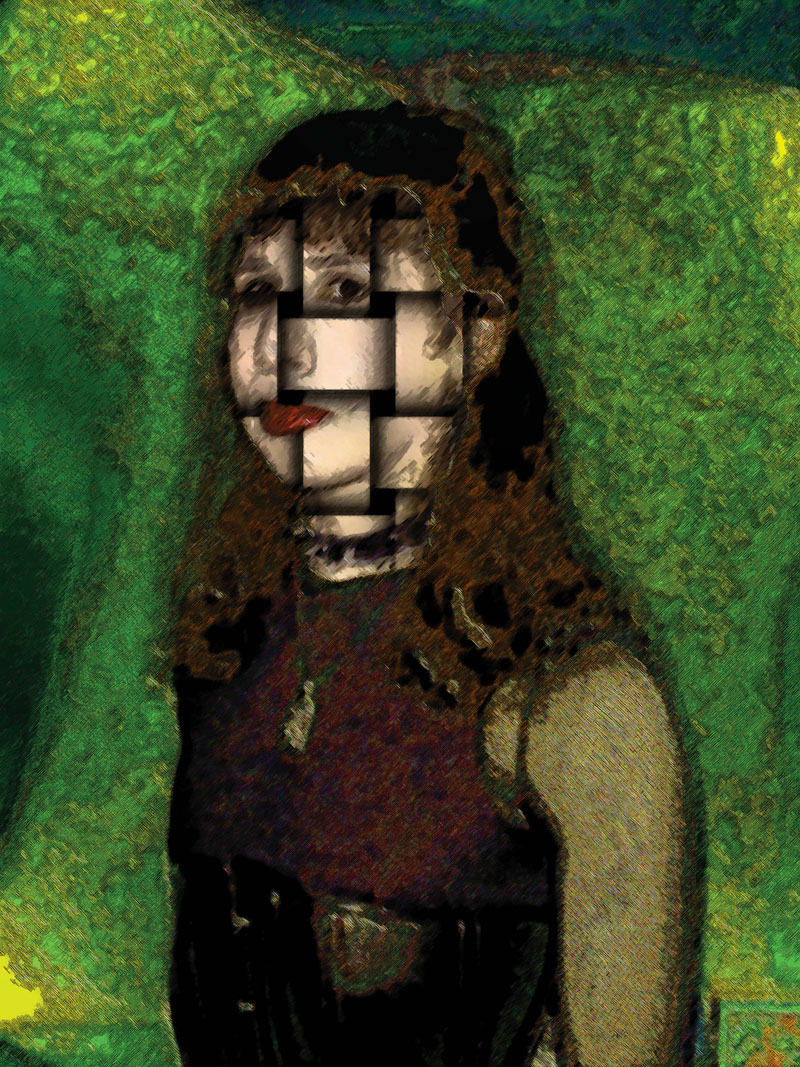
image of a woman who used to be a man, representing a Complex Adaptive System from Everything IS, a visual and philosophical theory of everything

Complex Adaptive System


page 50-51 from Everything IS, a visual and philosophical theory of everything 

Entropy is the tendency of a system to go to its most probable state: entropy does not have a probability of happening; rather, it is the process of the probable occurring. If 10 molecules of air are released into a vacuum box, there are more chances (the odds are better) that five will end up on one side and five on the other side (an even distribution of energy) than any other possible combination of the molecules. 

Entropy almost makes me want to drop the entire theory and base the universe solely on probabilities. Did a certain percent of San Franciscans switch from croissants to scones simply because once the scone was brought to our attention we were driven by entropy to even out the playing field between scones and croissants? Does entropy explain the desire to do something different than the previous generation? To rebel against or ungroup from their values or fashions or art or lifestyle? 

Maybe it’s the other way around: Maybe the desire to follow a new lead accounts for entropy; like the desire to try new things and then have everyone you know try them too. Maybe ungrouping doesn’t really exist—maybe it’s just the flip side of a new grouping. When we ungroup from one value/fashion/point of view/etc., we re-group toward some other value/fashion/point of view. Maybe entropy is just our word for the decisions to ungroup and regroup that are ultimately made by Everything in every situation. 

Purchase Book 

Purchase Greeting Card

Entropy: Everything Ungroups


05 Nov

abstract image representing entropy from Everything IS, a visual and philosophical theory of everything

Entropy: Everything Ungroups

page 48-49 from Everything IS, a visual and philosophical theory of everything

[Entropy, a definition: the tendency of all systems to break down and evenly distribute the energy between the system and the system’s surroundings. The reason a cup of coffee cools is attributed to entropy evening out the heat energy between the cup of coffee and the surrounding air; the reason an ice cube melts is attributed to entropy evening out the heat energy between the ice cube and the surrounding liquid.]

Entropy = group becomes dysfunctional for large enough numbers to leave and eventually be followed by others—singly and in groups—until original group has dissipated?

Purchase Book

Gravity: Everything Groups


05 Nov
abstract image representing gravity from Everything IS, a visual and philosophical theory of everything

Gravity: Everything Groups

page 46-47 from Everything IS, a visual and philosophical theory of everything

[Gravity, a definition: The attraction of all matter to all other matter which curves spacetime by an amount based on the mass of an object and its movement in relation to the frame of reference of the measurer.] 

Does Gravity = tendency to group and add more and more to group until

Purchase Book

Everything IS, a Book of Questions and a Theory of Everything by Sarah Curtiss

why is everything different from everything else? does infinity diversity rule?