Archive for October, 2010

Change


27 Oct
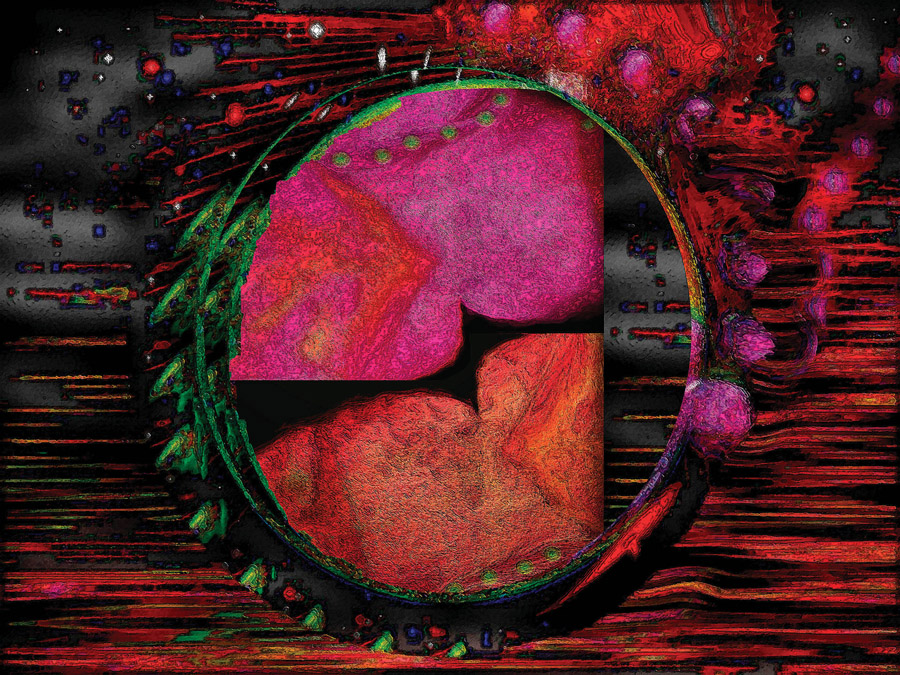
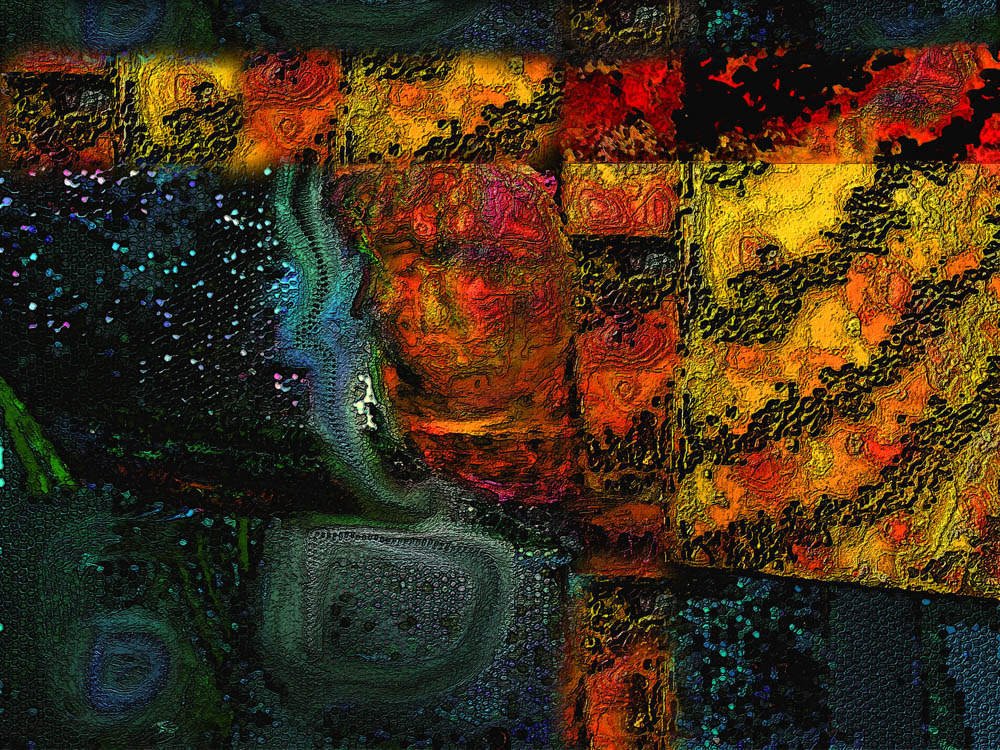
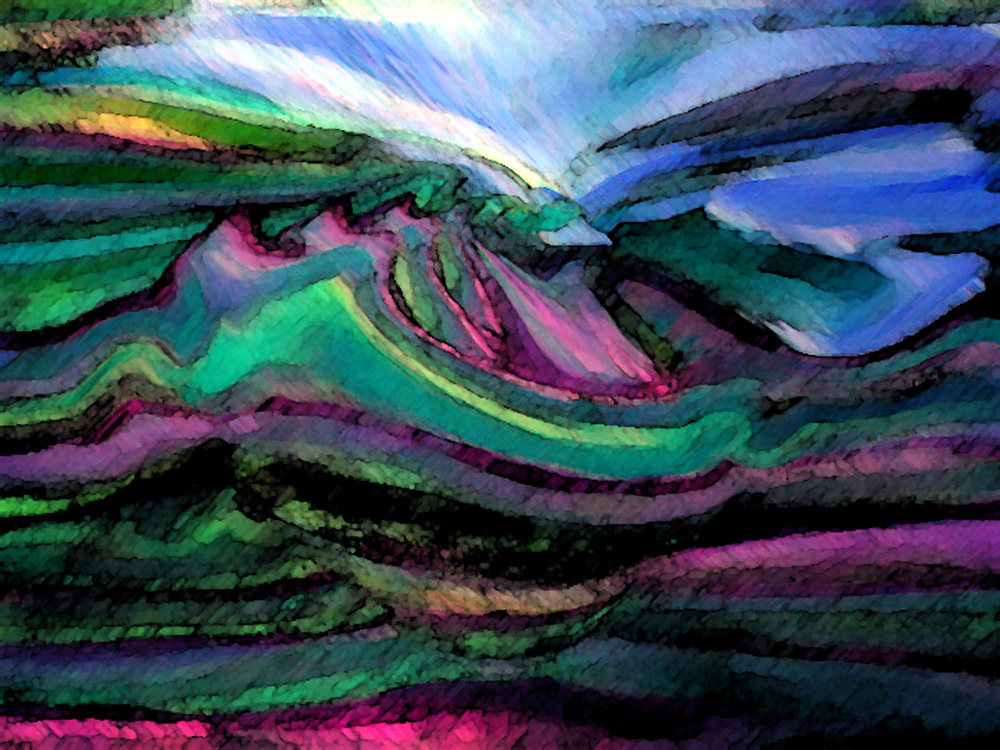
abstract representation of change from Everything IS, a visual and philosophical theory of everything

Change

page 44-45 from Everything IS, a visual and philosophical theory of everything

The process of feeding and caring for a body can be equated with that of feeding and caring for a society. Give a body everything it needs to stay healthy and eventually it will still fail and die. Sometimes it will fail and die young, even though it was given all it should have needed to stay healthy.

Wealth and prosperity bubble through an empire, rising out of the masses to concentrate in a few at the top who become more extravagant in their abuse of power and form extreme situations for those at the bottom. Something then happens to change the strength of the state, either internal or external war, possibly, or just a drifting in of outsiders and a drifting out of insiders, until the empire collapses.

I see the same pattern in fashion. The codpieces (hairstyles; skirt lengths….) get more and more extravagant until they reach some critical point and the fashion collapses. I discover curry and eat so much of it that I can no longer bear the smell. What’s going on? Why do animals get larger? Is nature a size queen? Do some of the fantastic designs of nature exist for the same reason that individuals take fashions to the extreme…like boys’ pants getting larger?
Purchase Book

Babel


22 Oct

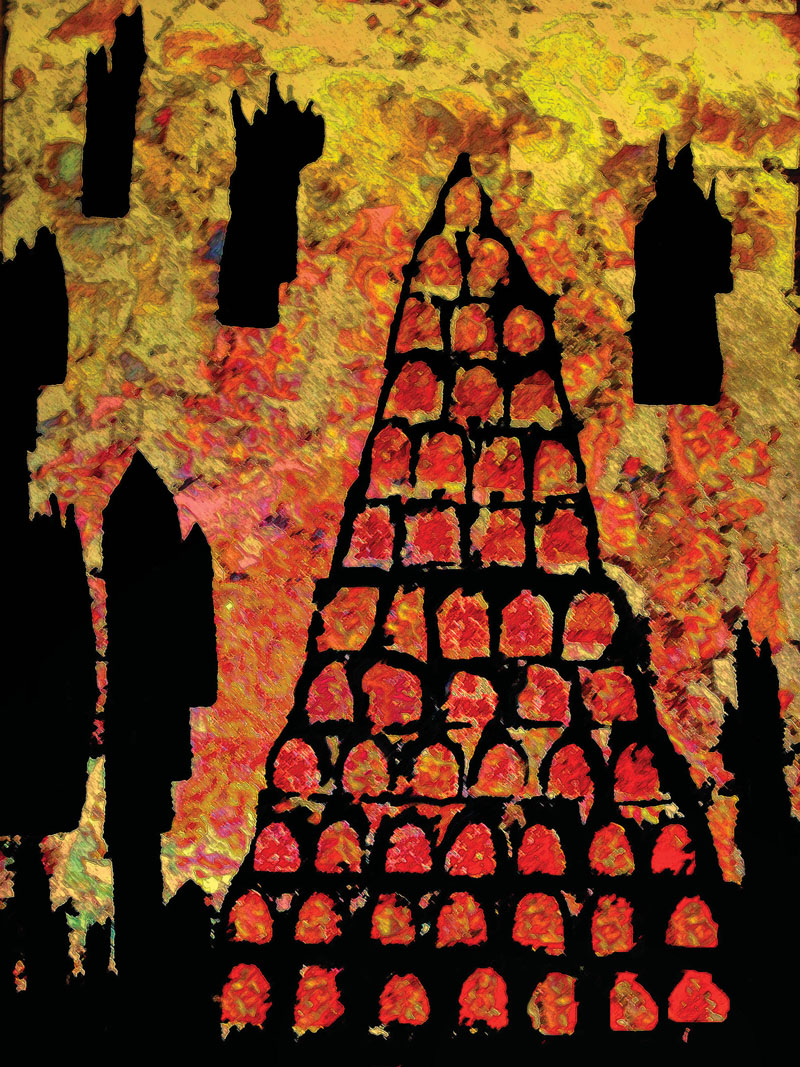
abstract representation of the diversity in mankind from Everything IS, a visual and philosophical theory of everything

Babel by William Solis

page 42-43 from Everything IS, a visual and philosophical theory of everything

original painting by William Solis is for sale: 24×36, gold frame, oil and gold leaf

It has been said that humans are the only creatures that question the structure of the universe, have a morality, and produce art, music and literature. It has been said that we are the only creature that is aware of our impending death. How do we know these things? Has anyone questioned a giant redwood to see if they are aware they will one day die? With a 2-4,000 year life-span, they are probably just becoming, in one generation, aware of the massive invasion of the planet by the human species.

Do we know that ants don’t string scent molecules together to form great works of art from another ant’s perspective? Do we know that they don’t produce fantastic music on some wave too low or high or weak for our ears or technology? We certainly know that ants hunt, farm, and make war. Morality must be a species-related characteristic, as what could be more evil to an ant than me with a can of RAID in my hand?

Do we know that the sun is NOT singing a choral song in light waves with the rest of the galaxy? Do we know that bacteria don’t disappear into our noses or mouths and pop out the other end purposefully or stay and colonize, as we would if we were able to disappear into a wormhole and pop out in another universe?

Do we know that viruses are not involved in inter-galactic trade and that we are not storage bins for their currency of bacteria along their vast trade routes? It seems as likely that we would have inner body experiences as out of body experiences.

Purchase Book

A Piece of the Puzzle


20 Oct

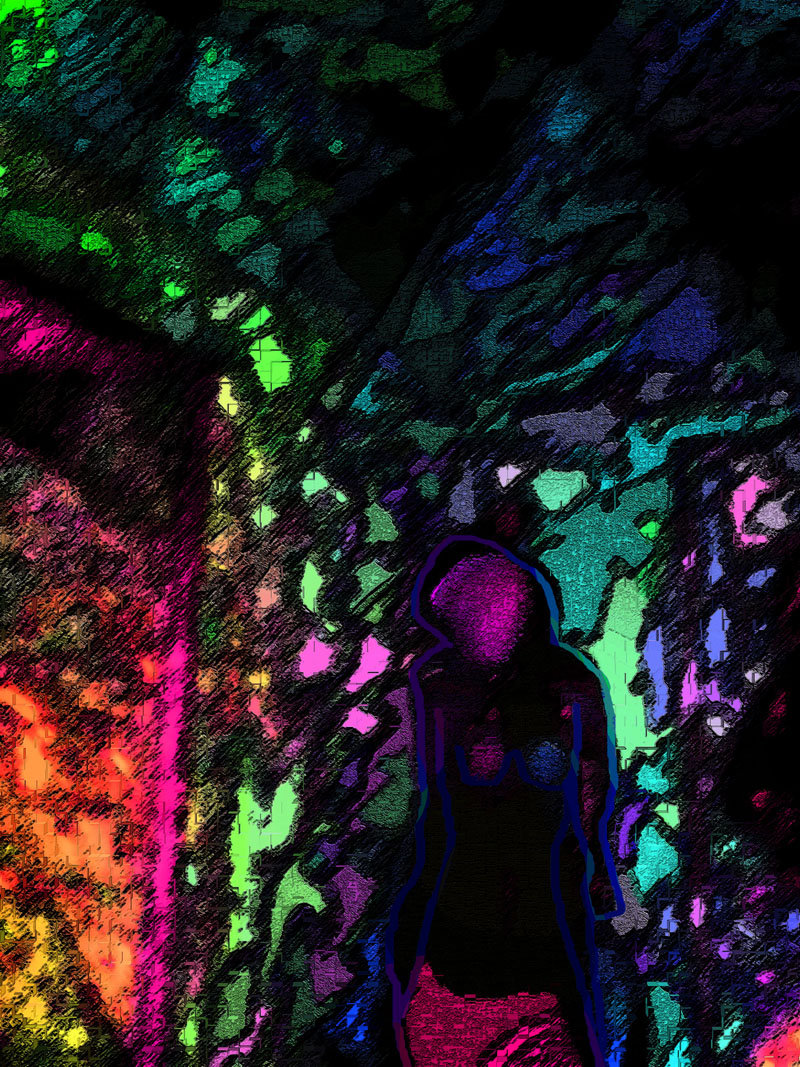
abstract representation of humanity as a piece of everything from Everything IS, a visual and philosophical theory of everything

A Piece of the Puzzle

page 40-41 from Everything IS, a visual and philosophical theory of everything

What is happening when two people report the exact same incident differently? Each individual person’s micro cosmos (using information provided by DNA) that built either the telescopes (eyes) or the media reporting the information back to the colony (the brain), is, as would be expected of a society, different in every one of us. Not, however, so different that we can’t trace the roots or heritage of the entire colony to a certain extent—like tracing the movement of the Celtic people across Europe to Ireland and then Scotland—or watching a family nose or smile pass from generation to generation- –or recognizing that the two people are describing the same event.

Could DNA truly be just a series of non-sentient molecules, which makes mistakes every time it replicates, some of which are successful “mutations” (a really negative word for something so incredible), but most of which are not? How can something with no decision-making capabilities make mistakes?

Or is DNA an infrastructure for proteins, the body’s worker bees? Is the splitting and reforming of DNA controlled by individual proteins making individual decisions? Is DNA the database of available data and the protein the programmer manipulating the data? Are our individual hair or blood or skin or eye cells the end report produced by these programmers?

Popular application software is always operated in ways not even considered by its developers. Sometimes this is a positive, certainly for the user who has discovered the shortcut. Sometimes this is a negative, causing some instability in the program, data or document that is not discovered until huge problems arise. Is this similar to an uninformed decision by a DNA molecule, or by the protein expressing it, creating a negative mutation?

If the process of DNA replication is built on the decisions of the molecules and atoms (and infinite other even smaller entities to lesser and lesser degrees) involved, it would be impossible to believe that it could ever be exactly the same twice…which appears to be the case. Infinite Sentience would predict that it would never be the same twice. Infinite Sentience predicts Infinite Diversity.

However, if, as current scientific paradigms would have me believe, on some elemental level all particles are identical, how is it possible that we have infinite diversity on all other levels? If all the bricks are identical, should there not be at least two snowflakes alike?

Purchase Book

Infinite Diversity


18 Oct

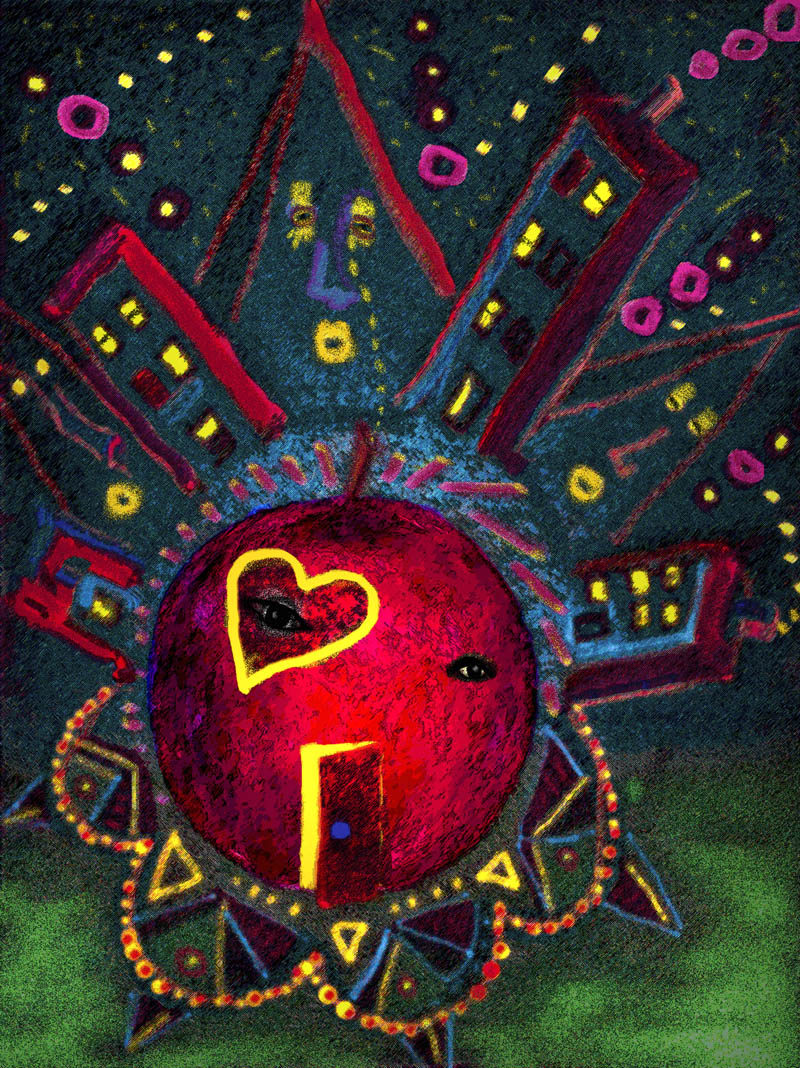
Abstract image with big apple representing infinite diversity from Everything IS, a visual and philosophical theory of everything

Infinite Diversity

page 38-39 from Everything IS, a visual and philosophical theory of everything

Rather than evolution being run by random “mistakes” in the splitting and re-forming of DNA strands, perhaps it is the result of infinite other societies making decisions to improve their lot in life, one-up their neighbors or just react to their own current marketing trends and family values: societies of subatomic material, societies of molecules, societies of bacteria, societies of humans, societies of universes.

At no one time can any prediction be made with 100% accuracy because it may be a day when the cells in the butterfly flapping its wings in the Amazon made a different plan. Only patterns can be traced, and even then, only the patterns that are available to our senses. Have we within us infinite sentient beings to which we are the universe, the god and the weather—flurry of tornados caused by refried beans eaten by the cosmos?

We are vast colonies of bacteria and microbes. At what point did these vast colonies gain their own sentience as one being? Did sentience emerge over time or did the entire sentience form from the first two in the group, becoming a stronger and stronger image as more were added. The process is in various stages (or densities or granularities) all around us, from the Portuguese Man of War (which is actually thousands of individual creatures acting in concert) to coral reefs, beehives and ant colonies, shoals of fish, herds of antelope, armies of men.

If the process is similar—never the same, of course; Infinite Sentience requires Infinite Diversity: it’s not just snowflakes!—on all levels, what might that tell us about the cosmos? We see that stars group into galaxies and groups of galaxies form clusters and even clusters of galaxies gather together in SUPER clusters. The Theory of Infinite Sentience extends Sentience to the cosmic level. Are galaxies cells in the much larger grouping we call our universe? Are they quarks in the still larger groupings of super clusters of universes?

Purchase Book

A Closer Look by Someone Else


13 Oct

abstract representation of the camera zooming in by someone else from Everything IS, a visual and philosophical theory of everything

A Closer Look by Someone Else

page 37 from Everything IS, a visual and philosophical theory of everything

The pattern changes when someone else in a different location on the persepective horizon is holding the camera.

Purchase Book

A Closer Look


13 Oct

Abstract representation of the camera zooming in from Everything IS, a visual and philosophical theory of everything

A Closer Look

page 36 from Everything IS, a visual and philosophical theory of everything

When the camera zooms in a different pattern appears.

Purchase Book

Infinity in a Nipple


11 Oct
Abstract representation of infinity from Everything IS, a visual and philosophical theory of everything

Infinity in a Nipple

page 34-35 from Everything IS, a visual and philosophical theory of everything

Let’s take our thought experiment further by erasing all the lines in the shifting sand that we have made between living matter and non-living matter; between plant and animal; between reptile and mammal—categories that were created by us and that have fuzzy lines between them: is a virus living? all mammals bear their young live and nurse them, except the platypus….there are always exceptions because we made up the rules. The rules don’t exist in and of themselves. If there is even one creature identified which does not fit wholly in one category or another, then there is no real line, just man-made categories. Are we driven to databases? Or are we just following Queen TUT’s patterns of grouping by grouping our data?

Now that those lines are erased, let’s back up to before there were one-celled creatures. Would the pattern then be the same? Did/do atoms group together into molecules for symbiotic or parasitic reasons or just for fun or because the atoms next to them were grouping? Or for any of the multiplicity of reasons that political systems rise and fall?

Did molecules follow the same pattern to form DNA strands, which attracted some other types of molecules for some other reason—like the large fish that have the smaller fish clean parasites off of them, perhaps—to form cells, which formed colonies which began to act in concert and became unable to act independently which then hung out in bunches of colonies which became shoals or bee hives or ant colonies or organs or cities or galaxies, the members of which are also not able to live independently any more?

Purchase Book

Purchase Greeting Card

Everything IS, a Book of Questions and a Theory of Everything by Sarah Curtiss

why is everything different from everything else? does infinity diversity rule?